

- Rock at Business is a trading name of Business that Rocks
S01E005 | Doubting Yourself? It Could Be Imposter Syndrome
In this episode of The Rock at Business Podcast, Maggie Taylor and Mark Vallance tackle the pervasive issue of Imposter Syndrome. They share personal stories, proven strategies, and a few laughs along the way. From intimidating boardroom encounters to recurring dreams, discover that you’re not alone in feeling like a fraud.

Navigating the Waves of Imposter Syndrome: A Journey Through Self-Doubt and Self-Discovery
Understanding Imposter Syndrome
Do you ever feel like everyone else has it all figured out, while you’re just winging it? Well, you’re not alone, and you’re definitely not broken. This feeling, often termed Imposter Syndrome, is something many people, even the most successful among us, experience. It’s that sneaky voice that whispers doubts in our ears, questioning our accomplishments and abilities. But today, we’re diving deep into this topic, sharing personal stories and proven strategies, all with a dash of humor and authenticity.
Welcome to the Rock at Business Podcast
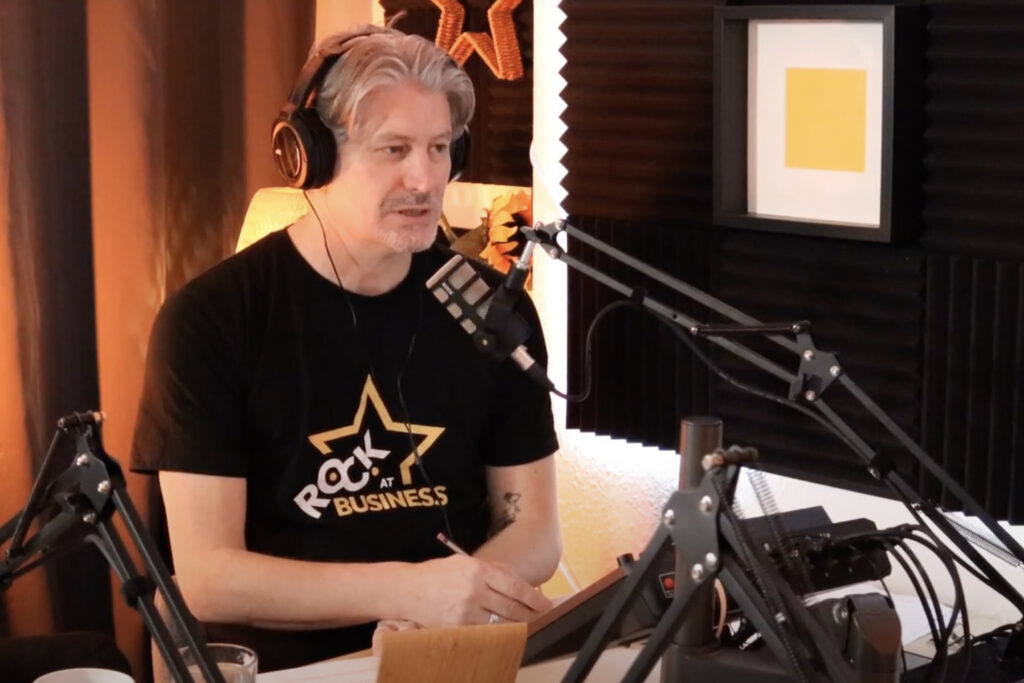
At Rock at Business, we believe great businesses begin with a spark. It’s about nurturing that initial idea and growing it into something phenomenal without feeling isolated in the process. Co-hosted by Maggie Taylor and Mark Vallance, the podcast explores nuances of business life, focusing on personal growth and shared experiences.
In this episode, we primarily delve into Imposter Syndrome, covering personal anecdotes, insights, and practical strategies for overcoming self-doubt. Our episode kicks off with Maggie and Mark exchanging playful banter over breakfast choices, setting a lighthearted tone for what’s to follow—a serious discussion on self-doubt in business settings.
A Lighthearted Entry to a Serious Discussion
Maggie and Mark’s banter about Mark’s networking breakfasts and his unwanted mushrooms sets the stage for a more profound conversation about Imposter Syndrome. This light intro underscores how even the most casual circumstances can trigger feelings of inadequacy. Mark humorously shares how not even his mushrooms were wanted, subtly introducing the theme of feeling out of place.

From Networking Tables to Boardroom Tables
Imposter Syndrome can manifest in various forms, whether at networking events where no one wants your metaphorical mushrooms or in serious business meetings where unfamiliar acronyms like “CRO” can throw you off balance. Maggie shares a personal experience of tackling a marketing meeting single-handedly and the spiral of doubt that ensued. It’s a relatable tale of overcoming a moment of insecurity, reinforcing the idea that self-doubt can hit at any time, no matter how experienced you are.
Real Stories, Real Solutions
To demystify Imposter Syndrome, we share stories of prominent figures like Mike Cannon Brooks, co-founder of Atlassian, and Howard Schultz of Starbucks, who despite their monumental success, have battled with these feelings. By normalising these discussions, we aim to illuminate the fact that self-doubt is a common thread even among high achievers.
Building a Positive Narrative: Tips to Combat Imposter Syndrome
1. Acknowledge and Normalise:
Recognise that imposter feelings are normal. Talk about them openly with peers or mentors. Sharing reduces their power and makes them more manageable.
2. Create a ‘Nice Things’ Folder:
Collect testimonials, thank-you notes, and positive feedback in a folder. It’s a personal repository that serves as a reminder of your capabilities during moments of doubt.
3. Reframe Your Thoughts:
Instead of viewing self-doubt as a weakness, consider it a sign of your passion and dedication. You care deeply about what you do, which is why these doubts surface.
4. Progress Over Perfection: Remember, it’s not about knowing everything. Embrace being a work in progress and focus on learning and growing.
5. Find Supportive Communities:
Be part of a community where open discussions are encouraged, like the Rock at Business community, where peers can exchange experiences and boost each other’s morale.
6. Introduce Alter Egos:
Inspired by a TED Talk, consider attributing your imposter-like thoughts to an “alter ego” and challenge those with a positive counterpart.
In Conclusion
Imposter Syndrome is a journey—a series of conversations, realisations, and growth moments. It’s crucial to recognise that if you’re feeling like an imposter, it often means you care about what you do and are eager to learn more. At Rock at Business, we advocate for continuous growth and connectivity, encouraging you to keep nurturing your spark. So, let’s keep the conversation going and continue to support one another in our shared journey.
Join Us
Want to join a community that understands you? Connect with us at Rock at Business, where asking questions about business or Imposter Syndrome gets you support and camaraderie. Our online community is free, opening doors to endless opportunities for learning and sharing.
Lastly, if you find value in these discussions, share this blog with someone who might need a little encouragement. Together, let’s transform self-doubt from a daunting shadow into a stepping stone for greatness. Until next time, keep growing, keep going, and keep rocking your business!